
Services
Dentures
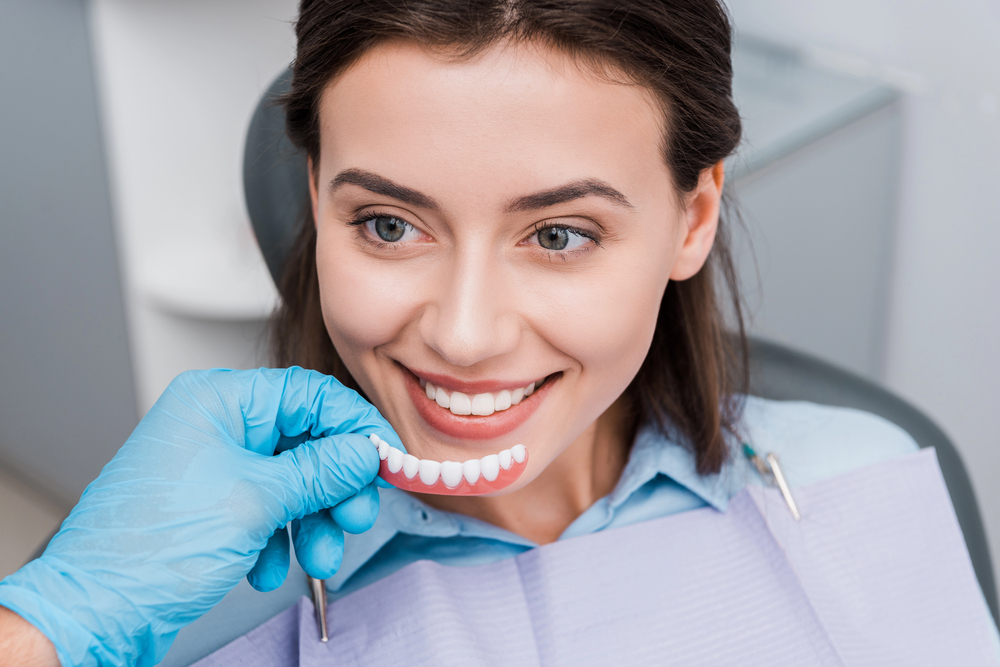
Whether you're missing all your teeth or just some, our complete and partial dentures help restore your smile.

Why choose us
Benefits of Dentures
Complete or Partial Options
We offer complete dentures to replace a full arch and partial dentures to fill gaps between your remaining natural teeth.
Eat and Speak Comfortably
Replacing missing teeth can make chewing and speaking feel more natural again.
Keep Healthy Teeth Supported
A partial denture fills gaps and helps your remaining natural teeth stay in place.
Sedation for Anxious Patients
If dental visits make you nervous, we offer sedation dentistry to help you feel more at ease.
Flexible Ways to Pay
We accept most dental insurance plans, Medicaid, and self-pay patients, plus financing through Sunbit and CareCredit.
Missing teeth affect much more than the look of your smile. They change how you chew, how clearly you speak, and how well your remaining teeth stay in position. Over time, gaps can let neighboring teeth drift, and losing many teeth can reduce the natural support of the lips and cheeks. Dentures are one of the most established ways to replace missing teeth. At Anytime Dental – Queen Creek, our dentists help patients from Queen Creek and San Tan Valley choose between complete dentures and partial dentures based on how many natural teeth remain and what each person needs day to day.
Dentures are removable replacement teeth set in a base designed to rest comfortably on your gums. Complete dentures replace a full arch of teeth, the upper, the lower, or both, when no natural teeth remain in that arch. Partial dentures fill in gaps when some healthy natural teeth are still present. They attach to those remaining teeth so the replacement teeth stay in place while you eat and talk.
The main difference between the two comes down to what we are working with. A complete denture relies on the shape of your gums and jaw for support. A partial uses your existing teeth as anchors, which also helps keep those teeth from shifting into open spaces. Many patients are surprised to learn that keeping even a few healthy natural teeth can make a partial a practical choice. That is why we look closely at the health of every remaining tooth before recommending an option.
Patients come to us for dentures from many different starting points. Some have lost teeth gradually to decay or gum disease and find that chewing has become uncomfortable or limited to one side. Others have a few missing teeth in a visible area and want to smile without hesitation. Some are already wearing an older denture that no longer feels right and want a fresh evaluation.
Another common situation involves teeth that are failing and cannot be saved. Because we offer both simple and surgical extractions in our office, we can plan tooth removal and replacement together under one roof. That means you are not coordinating between separate offices. For patients who feel anxious about dental work, we also offer oral sedation dentistry, which can make longer or more involved appointments feel more manageable.
Am I a better candidate for complete or partial dentures?
The answer depends mostly on how many healthy natural teeth you have left in each arch. If most or all of your teeth in an arch are missing or need to be removed, a complete denture is usually the better fit. If you still have several strong teeth, a partial lets you keep them while filling in the gaps.
During your exam, we evaluate your remaining teeth, your gum health, and the overall condition of your mouth. If gum disease is present, we may recommend treating it first, since healthy gums provide a better foundation for any denture. We will also talk through other tooth replacement options we offer, such as bridges and dental implants, so you can compare approaches and make an informed decision. Our goal is to explain the tradeoffs clearly so the choice feels like yours.
How do I care for my dentures and what results can I expect?
Daily cleaning and regular checkups are the most important parts of caring for dentures. Like natural teeth, dentures collect plaque and food debris. They need consistent attention to stay fresh and comfortable.
It is normal for new dentures to take some getting used to. Speaking and chewing may feel different at first, and many patients start with softer foods while they adjust. If something feels uncomfortable, let us know. Small adjustments can often make a meaningful difference. Helpful daily habits include:
- Brushing your dentures every day with a soft brush made for dentures
- Removing them at night unless we advise otherwise
- Storing them in water or a soaking solution so they do not dry out
- Handling them over a folded towel or a sink of water to avoid damage if dropped
- Brushing your gums, tongue, and any natural teeth to keep your mouth healthy
Your mouth naturally changes over time, so periodic visits help us check the fit and the condition of your gums. Partial denture wearers also benefit from routine cleanings and exams to protect the natural teeth that hold their appliance in place.
Can I use insurance or financing to pay for dentures?
Yes. We accept most dental insurance plans, and we also accept Medicaid and self-pay patients. Coverage for dentures varies from plan to plan, so our team is happy to help you understand what your benefits may include before treatment begins.
If you would like to spread out the cost, we offer financing through Sunbit and CareCredit. These options can make it easier to move forward with treatment on a timeline that fits your budget. We will review the details with you so there are no surprises.
Whether you are missing a few teeth or considering a full set of replacements, Dr. Jordan Karren, Dr. Adam Borgia, Dr. Clark Larson, and our team are here to answer your questions and guide you through each option. We welcome patients from Queen Creek, San Tan Valley, and the surrounding area. Contact Anytime Dental – Queen Creek today to schedule a denture consultation and take the next step toward eating, speaking, and smiling with more confidence.
The process
What to expect
- 1
Exam and Consultation
We examine your mouth and help you decide whether a complete or partial denture fits your needs.
- 2
Custom Denture Fitting
We handle any needed preparation, such as extractions, and fit your denture for comfort.
- 3
Ongoing Follow-Up Care
We check how your denture fits over time and make adjustments to keep you comfortable.
Questions
Dentures FAQs
How much do dentures cost, and does insurance help?
The cost of dentures depends on whether you need complete or partial dentures and what your mouth needs before they're made, so we'll give you a clear estimate after your exam. We accept most dental insurance plans, Medicaid, and self-pay patients, and our team will help you understand your coverage. We also offer financing through Sunbit and CareCredit to help make treatment more manageable.
What's the difference between complete and partial dentures?
Complete dentures replace a full arch of teeth, while partial dentures fill in gaps when some of your natural teeth remain. Complete dentures are usually a fit for patients who have lost all of their upper or lower teeth or need the remaining ones removed. Partial dentures suit patients who still have healthy teeth to keep, and they help prevent those teeth from shifting into open spaces.
Will getting dentures hurt?
Getting dentures made isn't typically painful, though it's normal to feel some soreness or pressure while your mouth adjusts. If you need extractions first, we perform simple and surgical extractions in our office and offer oral sedation for patients who feel anxious. Our team will check your fit and make adjustments to help your new dentures feel as comfortable as possible.
How long does it take to get used to dentures?
Most patients need some time to adjust to speaking and eating with new dentures, and the timeline varies from person to person. Starting with softer foods and practicing speaking can help you get comfortable. We're here for follow-up visits if anything feels off, so you don't have to work through it alone.
Are there alternatives to dentures?
Yes, depending on your needs, bridges or dental implants may be options for replacing missing teeth. Bridges can replace one or a few teeth next to healthy ones, while implants replace teeth with a fixed restoration. During your visit, our dentists will talk through each option with you so you can choose the tooth replacement that fits your mouth, goals, and budget.